



You have the venue and the date. Now come the flowers, and with them the chance to make a space feel like yours rather than simply decorated. The schemes that work best are rarely the most expensive; they are the ones that read the room. Scale, colour and style do most of the heavy lifting, and all three are easier to judge once you stop browsing arrangements in isolation and start thinking about the building they will sit in.
Read the room before you choose a single stem
Before you settle on a palette, spend ten minutes looking at the space properly. Note the ceiling height, how much natural light reaches the tables, and what colours are already present: carpet, drapes, panelling, exposed brick, polished floors. A venue with a strong personality — dark wood, patterned wallpaper, stained glass — needs flowers that support it rather than argue with it.
If you can, visit at the same time of day as your ceremony and reception. A room that feels airy at noon can turn golden and dim by six, and colours shift with it. Ask the venue for photographs of a previous wedding set up in the same room; it will tell you more about proportion than any showroom display.
Scale: the detail most couples get wrong
Proportion is where good schemes are won. Tall arrangements in a low-beamed barn will crowd the room and block sightlines; a single small posy on a long trestle table in a high-ceilinged ballroom will disappear entirely. Match the size of the arrangement to the surface beneath it and the space above it.
On dining tables, aim for either below the seated eyeline or well above head height — nothing in between.
Guests should be able to talk across the table without leaning around a centrepiece. Long tables usually want a run of lower arrangements, bud vases or candles; round tables can take a fuller centrepiece because the sightlines radiate outwards.
- Low ceilings and beams: low, wide arrangements, trailing foliage, table-level candles.
- Tall or vaulted rooms: height, hanging installations, generous urns on plinths.
- Long tables: clusters and runners rather than one tall centrepiece.
- Ceremony focal points: scale to the doorway, arch or altar step, not to the whole room.
Colour: let the venue set the temperature
Neutral rooms are generous. Hotels, marquees and blank-canvas event spaces will carry stronger colour — deep berry, mustard, burnt orange — without complaint. Rooms that are already colourful ask for restraint: creams, soft greens and plenty of foliage let the architecture stay the star.
Work with the light
Candlelight and warm bulbs flatter peaches, blush and gold. Daylight through large windows, or the cooler light of a glass-roofed atrium, suits whites, greens and blues better. If your reception runs from bright afternoon into evening, choose a palette that behaves in both — soft whites with greenery and a little depth in the foliage rarely disappoints.
Let the season lead
Seasonal flowers are usually fresher, better value and more at home in the setting. Spring suits tulips, narcissi and blossom; summer gives you garden roses, sweet peas and dahlias; autumn brings berries, hydrangea and warm russets; winter is the season for amaryllis, hellebores and evergreens. A florist can suggest substitutions when something is unavailable, so stay flexible about exact varieties and firm about the overall look.
Style: barns, hotels, churches and gardens
Barns and rustic spaces
Rustic does not have to mean hessian and jam jars. Rough timber and stone look best against textures that answer them: loose, garden-gathered shapes, branches, dried grasses, terracotta and zinc containers, trailing ivy. Keep the palette tight so the relaxed shapes still feel deliberate rather than accidental.
Hotels and country houses
Formal architecture — cornices, marble, panelled walls — carries structured arrangements, symmetry and a touch of height. Classic roses, hydrangea and lisianthus in glass or silver look at home here. Symmetrical pairs at the entrance and a well-proportioned top table arrangement will do more than flowers scattered everywhere.
Churches and registry offices
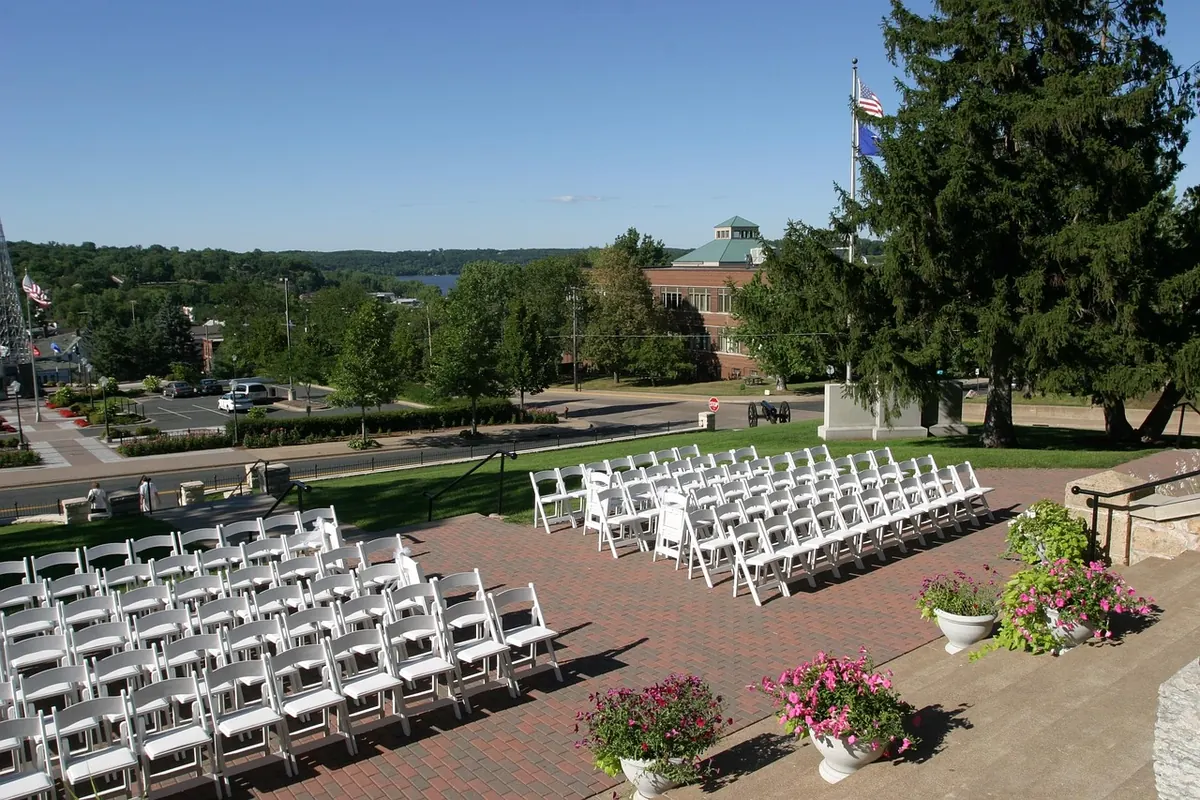
Always check the rules first. Some churches have restrictions on fixings, arrangements that block the aisle, or who may remove flowers afterwards. Ask about access times, whether existing arrangements are already in place, and where the light falls. In civic rooms, keep arrangements compact and portable so they can be moved to the reception afterwards.
Marquees and gardens
Here you are creating the room, so you carry more of the weight. Choose flowers and foliage that cope with warmth, direct sun and the occasional gust: roses, chrysanthemums, alstroemeria and hydrangea generally hold up well, while delicate sweet peas and lily of the valley can flag in a hot marquee. Weight the containers, avoid tall, top-heavy designs outdoors, and place arrangements away from doorways where people will brush past them.
The practical questions to ask before you commit
- What time can the florist get in to set up, and when must everything be cleared?
- Is there a lift, ramp or loading bay, and how far is the walk from the vehicle?
- Is there a water supply and somewhere cool to store spare arrangements?
- Are fixings permitted on walls, beams or ceilings, and who is responsible for any damage?
- Will the flowers be moved between ceremony and reception, and by whom?
- Who takes the arrangements home at the end of the night, and has the venue agreed?
Spend where guests actually look
Put the budget into the places people pass and photograph: the entrance, the ceremony focal point, the top table, the bar. Guest tables can be generous without being expensive — foliage, candles, bud vases and a few focal blooms go a long way. Where possible, plan arrangements that can be reused between the ceremony and the reception, and agree in advance who will move them. Two hours between events is usually enough, but only if someone is responsible.
Bringing it together
Book a florist who has worked at your venue before if you can, and share photographs of the room as well as your mood board. Visit together if the venue allows it, and agree a clear plan covering delivery times, set-up, breakdown and what happens to the flowers afterwards. Confirm the details in writing.
Above all, be honest about the space. Choose the scale the room asks for, a palette that works with the light, and a style that complements the building rather than competing with it. Do that, and the flowers will look as though they belong there — which is the whole point.
Photo: chirowife / Pixabay